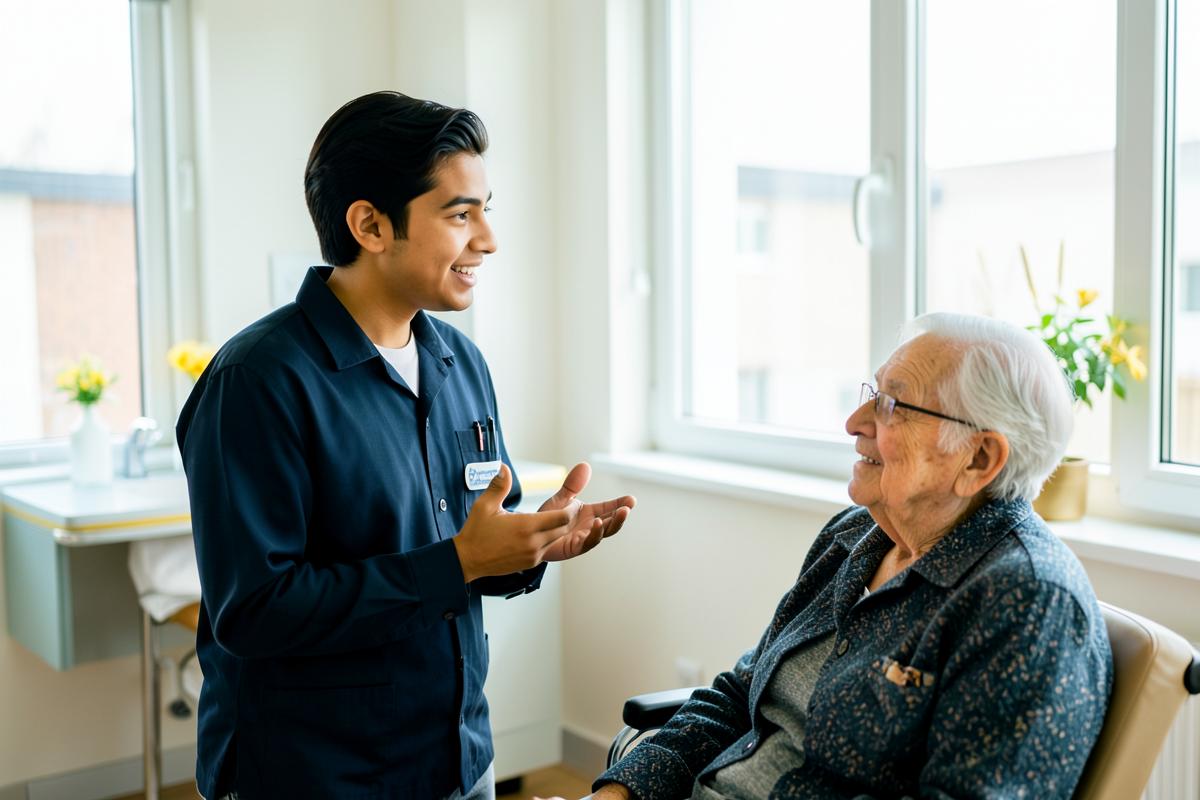
Freiwilliges Soziales Jahr — FSJ — places you inside a German social institution for six to eighteen months: a hospital, a care home, a kindergarten, a facility for people with disabilities. It is voluntary service, modestly paid, and one of the most honest previews of healthcare work in Germany that a candidate can get.
What you receive, and what you do not
You receive pocket money, usually accommodation or a housing allowance, social insurance contributions, seminar days and a certificate at the end. You do not receive a professional salary, and treating FSJ as a work route sets the wrong expectations for both the placement and the visa.
Who it suits
FSJ rewards candidates who genuinely want the sector, not just the country.
- Nursing, paramedic and allied-health graduates wanting German clinical exposure
- School leavers who want a structured, supervised first year abroad
- Candidates aiming for nursing Ausbildung who need language immersion first
- Anyone who wants to test care work before committing years to it
Language is the real gate
Most institutions expect B1 German, and some ask for B2 for clinical settings. Language is where FSJ timelines are won or lost: the placement letter is often available long before the certificate is.
How the year compounds
Candidates who finish FSJ well leave with a German reference, tested language and a supervisor who knows their work. That combination makes the next step — nursing recognition or an Ausbildung contract — materially easier to arrange.
Frequently asked questions
This guide is general information, not legal or immigration advice. Rules, fees and processing times are set by the relevant authorities and change without notice. Speak with a consultant for requirements specific to your case.